8 Gentle Somatic Yoga Poses for Neck, Shoulder, and Back Pain
- Jul 10
- 5 min read

If your neck feels stiff after hours at a desk, your shoulders stay tight no matter how much you stretch, or your lower back aches by the end of the day, you're not alone. Many people experience chronic muscle tension caused by stress, poor posture, repetitive movements, or long periods of sitting.
Somatic Yoga Poses are slow, mindful movements that help retrain your brain and muscles to release unnecessary tension. Unlike traditional stretching, somatic yoga focuses on improving the communication between your nervous system and muscles, helping you move with greater ease and comfort.
Whether you're new to yoga or looking for a gentler approach to pain relief, these movements can help you reconnect with your body and support long-term mobility.
Why Do We Hold So Much Tension?
Pain doesn't always come from an injury. Often, it's the result of muscles staying partially contracted for long periods due to stress or repetitive habits.
Common causes include:
Sitting at a computer all day
Looking down at your phone
Emotional stress and anxiety
Poor posture
Sleeping in awkward positions
Lack of regular movement
Over time, your brain begins to treat these tight muscle patterns as "normal," making it difficult to fully relax.
Somatic movement helps interrupt these patterns by teaching your nervous system a healthier way to move.
How Is Somatic Yoga Different?
Many people wonder about Somatic Yoga vs Traditional Yoga.
Traditional yoga often emphasizes flexibility, strength, and holding postures for longer periods. Somatic yoga focuses on gentle, slow movements performed with awareness. Instead of forcing muscles to stretch, you gradually retrain the nervous system to release chronic tension.
This makes it especially beneficial for people with:
Chronic neck or back pain
Limited flexibility
Stress-related muscle tightness
Previous injuries
Beginners who want a gentle practice
8 Gentle Poses to Relieve Neck, Shoulder, and Back Pain
1. Neck Release
Sit comfortably with your spine tall.
Slowly lower one ear toward your shoulder without forcing the stretch. Return to center and repeat on the opposite side.
Move slowly and notice where tension begins to soften.
Helps with:
Neck stiffness
Desk posture
Stress headaches
2. Shoulder Rolls
Lift both shoulders toward your ears.
Roll them backward slowly before allowing them to drop naturally.
Repeat several times while breathing deeply.
Benefits:
Releases shoulder tension
Improves posture
Increases shoulder mobility
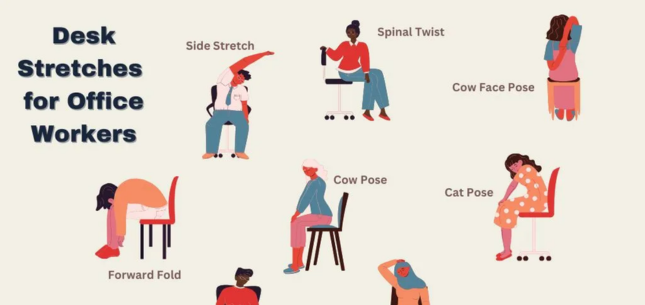
3. Cat-Cow Movement
Begin on your hands and knees.
As you inhale, gently arch your back and lift your chest.
As you exhale, slowly round your spine while relaxing your neck.
Keep the movement smooth rather than forcing the stretch.
Supports:
Spinal mobility
Lower back comfort
Better posture
4. Pelvic Tilts
Lie comfortably on your back with knees bent.
Gently flatten your lower back into the floor, then slowly release.
The movement is small but highly effective.
Helps:
Reduce lower back stiffness
Improve core awareness
Relax tight hip muscles
5. Child's Pose
Sit back toward your heels while extending your arms forward.
Rest your forehead comfortably on the mat or a cushion.
Breathe slowly for one to three minutes.
Benefits include:
Gentle back stretch
Shoulder relaxation
Stress relief
6. Gentle Spinal Twist
Lie on your back.
Bring both knees toward your chest and slowly lower them to one side.
Keep both shoulders relaxed on the floor.
Hold comfortably before switching sides.
Can help:
Improve spinal mobility
Ease lower back tightness
Relax the nervous system
7. Supported Bridge
Lie on your back with knees bent.
Lift your hips only slightly and place a yoga block or cushion underneath for support.
Allow your body to relax without straining.
Benefits:
Opens the front of the body
Relieves lower back pressure
Encourages deep breathing
8. Constructive Rest Position
Lie on your back with knees bent and feet flat on the floor.
Rest your hands on your abdomen.
Close your eyes and breathe naturally for five to ten minutes.
This simple position allows your nervous system to settle while your muscles gradually release tension.
It is one of the most effective forms of Somatic Yoga Poses for everyday stress recovery.
Tips for Beginners
If you're practicing Somatic Yoga for Beginners, remember that slower is usually better.
Keep these tips in mind:
Never force a movement.
Focus on how your body feels rather than how a pose looks.
Breathe naturally.
Practice consistently, even if it's only ten minutes a day.
Stop if you experience sharp or worsening pain.
The goal isn't perfect flexibility. It's creating healthier movement patterns that your body can maintain.
Why Consistency Matters
Many people notice temporary relief after stretching, but tension often returns because the nervous system hasn't learned a new pattern.
Somatic movement works differently.
With regular practice, your brain gradually recognizes that certain muscles no longer need to stay contracted all the time. This can improve posture, reduce discomfort, and make everyday activities feel easier.
Small daily sessions often provide better long-term results than occasional intense workouts.
Experience Guided Somatic Yoga in Auburn
Learning these movements at home is a great first step, but working with an experienced instructor can help you move more safely and effectively.
At Insumataq Studio, our Somatic Yoga Auburn classes are designed for all experience levels, including beginners, older adults, and anyone recovering from stress-related tension or chronic discomfort. Each session emphasizes mindful movement, nervous system regulation, and body awareness in a welcoming environment.
If you're ready to move with less pain, improve your posture, and reconnect with your body, join one of our yoga classes in Auburn, CA, and experience the benefits of gentle somatic practice.
Frequently Asked Questions
1. Are Somatic Yoga Poses suitable for beginners?
Yes. The movements are gentle, slow, and accessible, making them ideal for beginners, seniors, and anyone recovering from chronic tension or limited mobility.
2. How often should I practice somatic yoga?
Practicing for 10 to 20 minutes, three to five times per week can help improve body awareness and gradually reduce muscle tension.
3. What is the difference between Somatic Yoga vs Traditional Yoga?
Traditional yoga often focuses on flexibility, strength, and posture alignment, while somatic yoga emphasizes slow, mindful movement that helps retrain the nervous system and release habitual muscle tension.
4. Can somatic yoga help with chronic neck and back pain?
Many people find it helpful for reducing stiffness and improving mobility. However, persistent or severe pain should be evaluated by a qualified healthcare professional before beginning any exercise program.
5. Can I practice these movements at home?
Absolutely. Most somatic exercises require little space and no special equipment, making them easy to include in your daily routine. Guided classes can also help you refine your technique and build confidence.
Final Thoughts
Pain doesn't always require more stretching or harder workouts. Sometimes, your body simply needs a chance to slow down and relearn healthy movement patterns. Somatic Yoga Poses offer a gentle, science-informed approach that supports the connection between your brain and muscles, helping release chronic tension while improving comfort and mobility.
Whether you're dealing with neck stiffness, shoulder tightness, or lower back discomfort, a consistent somatic practice can help you move more freely and feel more at ease in your body. If you're in Auburn, CA, consider joining a guided class at Insumataq Studio to experience the benefits of mindful movement in a supportive community.


Comments